


Boots Bantock, wandering troubadour, penny poet and painter of a vanishing England
Boots Bantock, wandering troubadour, penny poet and painter of a vanishing England

Telegraph ObituariesWed, July 29, 2026 at 12:35 PM UTC
0
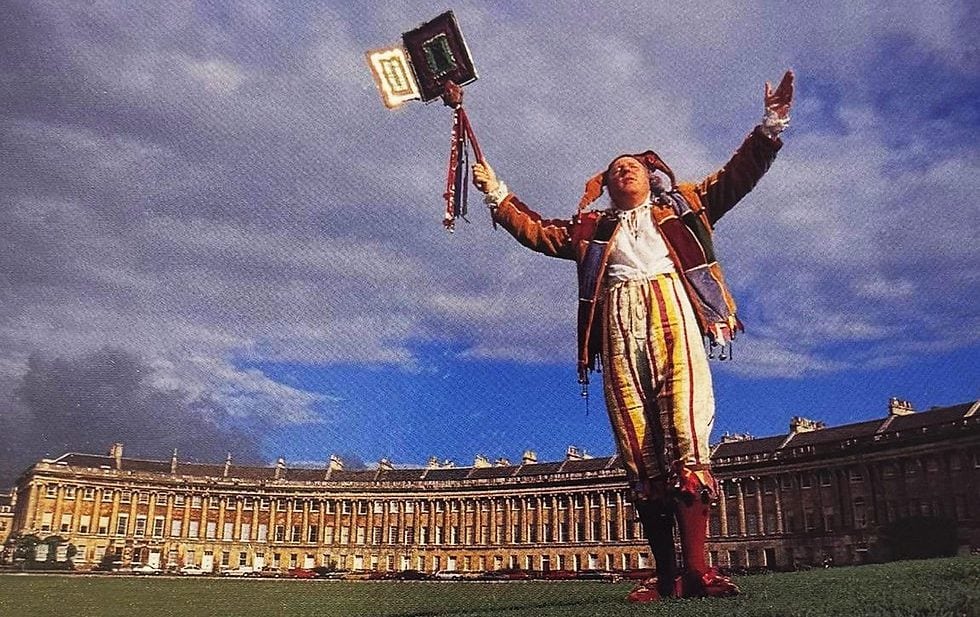
‘The Bard of Bath’ declaiming
Boots Bantock, “the Bard of Bath”, who has died aged 85, was an artist, troubadour, motley fool, court jester and penny poet.
Christopher Gibbs likened him to Charles Ryder in Brideshead Revisited, whose lot it was “to paint houses and parks and the tamed and tilled landscape that is our great glory, and like Ryder he has felt a terrible urgency to chronicle England’s beauties before they fall to the developer and insurance company… He observes with clarity and tenderness the places he paints, painfully aware of the depredations of modern farming, of elm disease and mammon-worship, and it is this imminent sense of the rape by man of God’s England that gives depth and poignancy to his carefully distilled work.”
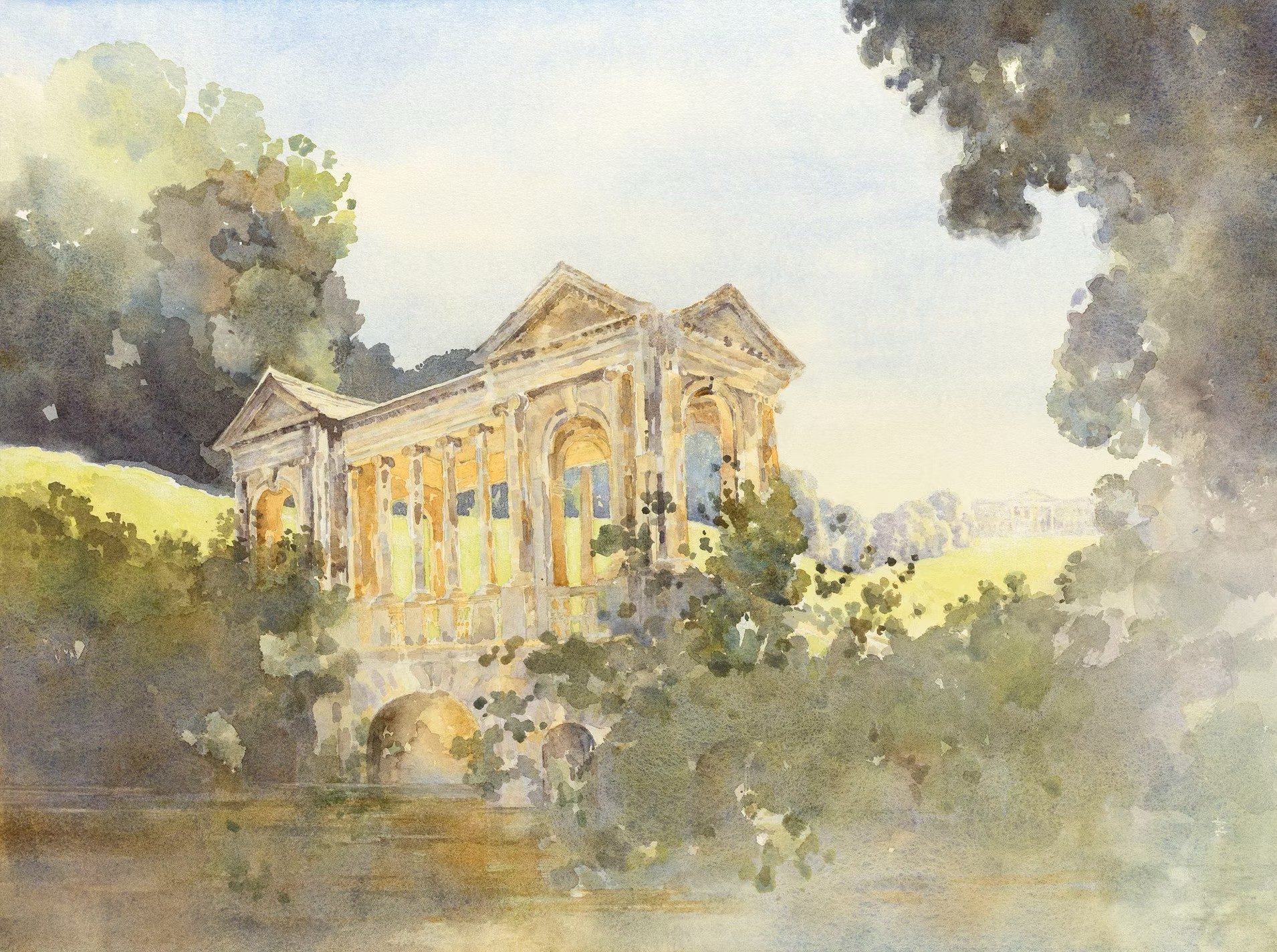
The Palladian bridge, Prior Park, 1991 - Estate of Boots Bantock
Of no lesser importance, however, was the persona of Boots the troubadour, “who emerges from his elegantly camouflaged caravan and strides across the flowering fields clad in rainbow motley and, as soon as an audience materialises, recites in stentorian tones his latest poems, pungent tirades against the evils of whaling, cheeky sparrings at the Lord-Lieutenant of Herefordshire, noble rants at the lunacies of metrication.”
Terence Euan Murray Bantock was born in Shropshire on May 10 1941, the second of four children. A rebel from an early age, kicking against the pricks, he abhorred and suppressed his given name Terence, and was always known as Boots, although nobody could remember why.
On his father’s side he was descended from a Presbyterian gamekeeper for the Countess of Sutherland at Dunrobin, whose son and grandson had prospered in Wolverhampton as it entered the Industrial Revolution, where Bantock House is now a local history museum. The composer Sir Granville Bantock was a relation.
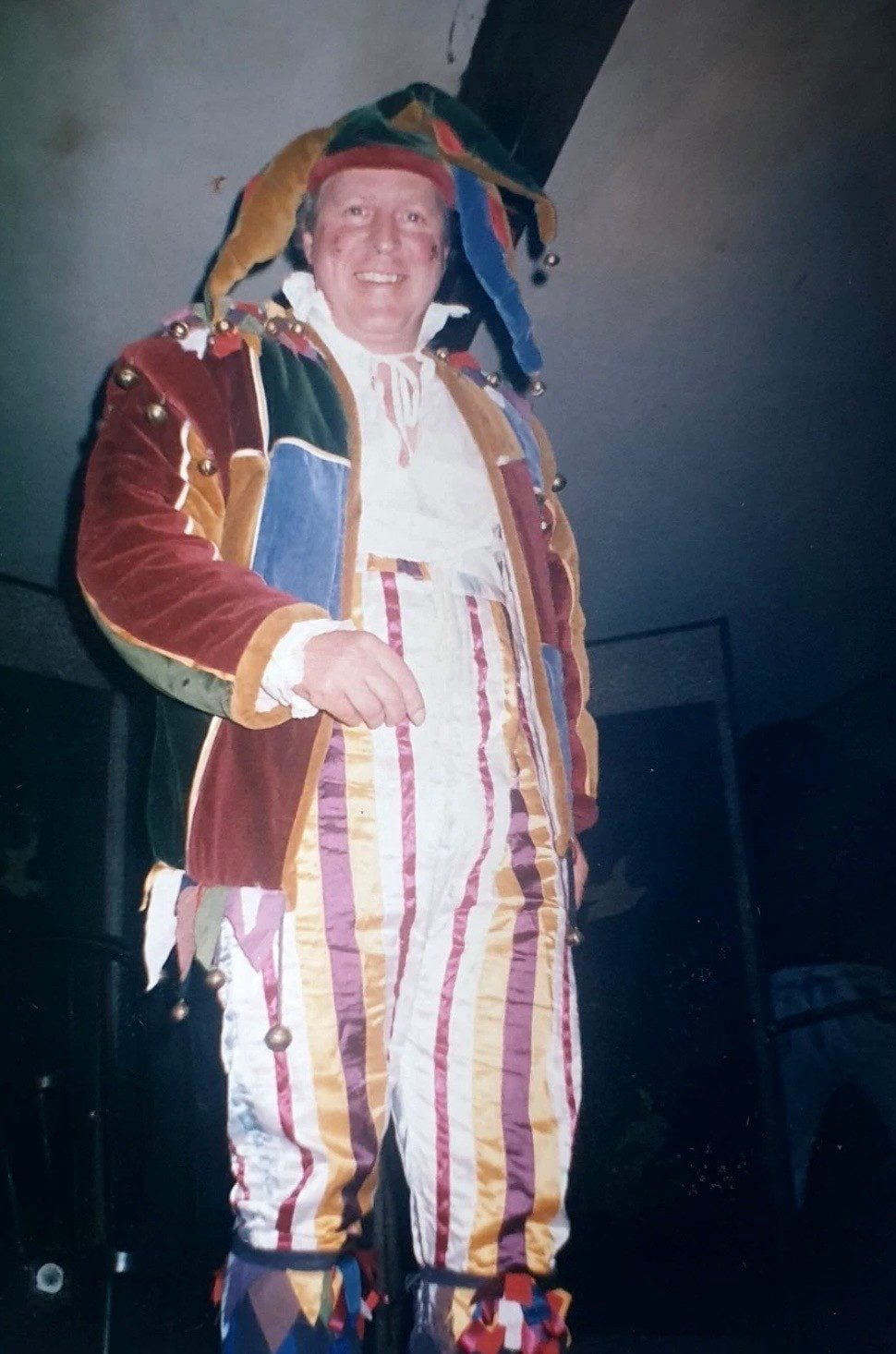
Delivering noble rants at the lunacies of metrication
Brought up as a Roman Catholic, Boots was educated by the scholar monks at Downside, where he fell under the spell of Dom Hubert van Zeller, sculptor, writer and ascetic, and Christopher Leyne, who encouraged him as an artist and instilled a contemptus mundi moderated by a spiritual intensity he never quite lost.
At Downside Boots also made lifelong friendships with a talented artistic set, including the satirist Auberon Waugh, the painter and gallerist Rob Stuart, the artist Willie Feilding, Nicholas Gormanston, the premier viscount of Ireland, and the decorator David Mlinaric, who recalled Bantock in the art room as “very competitive and better than all of us right from the start”.
After a spell at Camberwell School of Art, Bantock spent his inheritance on years of wandering. In the west of Ireland in 1961, he bartered pictures for his keep, and fostered his paternal grandmother’s Irish connections, as if he nurtured some atavistic memory of hapless Beckettian tramps, garrulous poets and wanderers. He was taken up by the gentry. On one outing, Garech Browne stopped his Rolls-Royce dead, and said to him: “Can you not see the leprechauns crossing the road?”
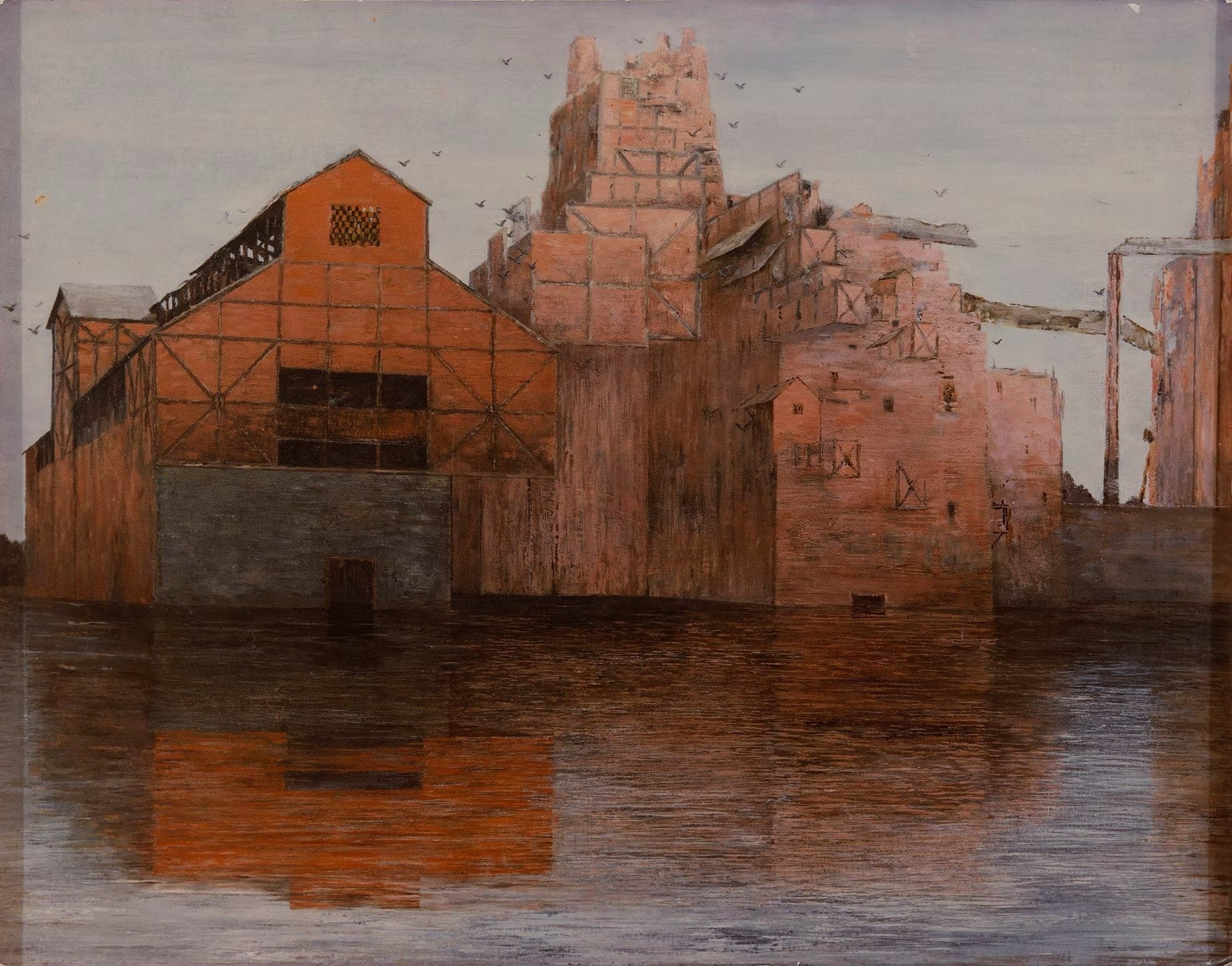
Warehouses, Dublin, 1969 - Estate of Boots Bantock
Ireland was followed by adventures in the Orient, overland to India and Sri Lanka, where his sketches evoked the rat temples of Rajasthan and the rock-cut shore temples of Mahabalipuram.
He was inspired by Augustus John to wander with his Romany circus wagon, inside as exotically indulgent as a tart’s parlour. His ménage included two Welsh cobs, ridden bareback at a gallop, and two sheepdogs: Bronwen, who never stopped barking, and Blister, furiously nipping at heels. He joined the hippie baronet Mark Palmer’s “cavalcade of horse-drawn caravans”, as his friend Henrietta Moraes called them, painting as he meandered across the upland byways of the Welsh Marches, the West Country and the Celtic fringe.
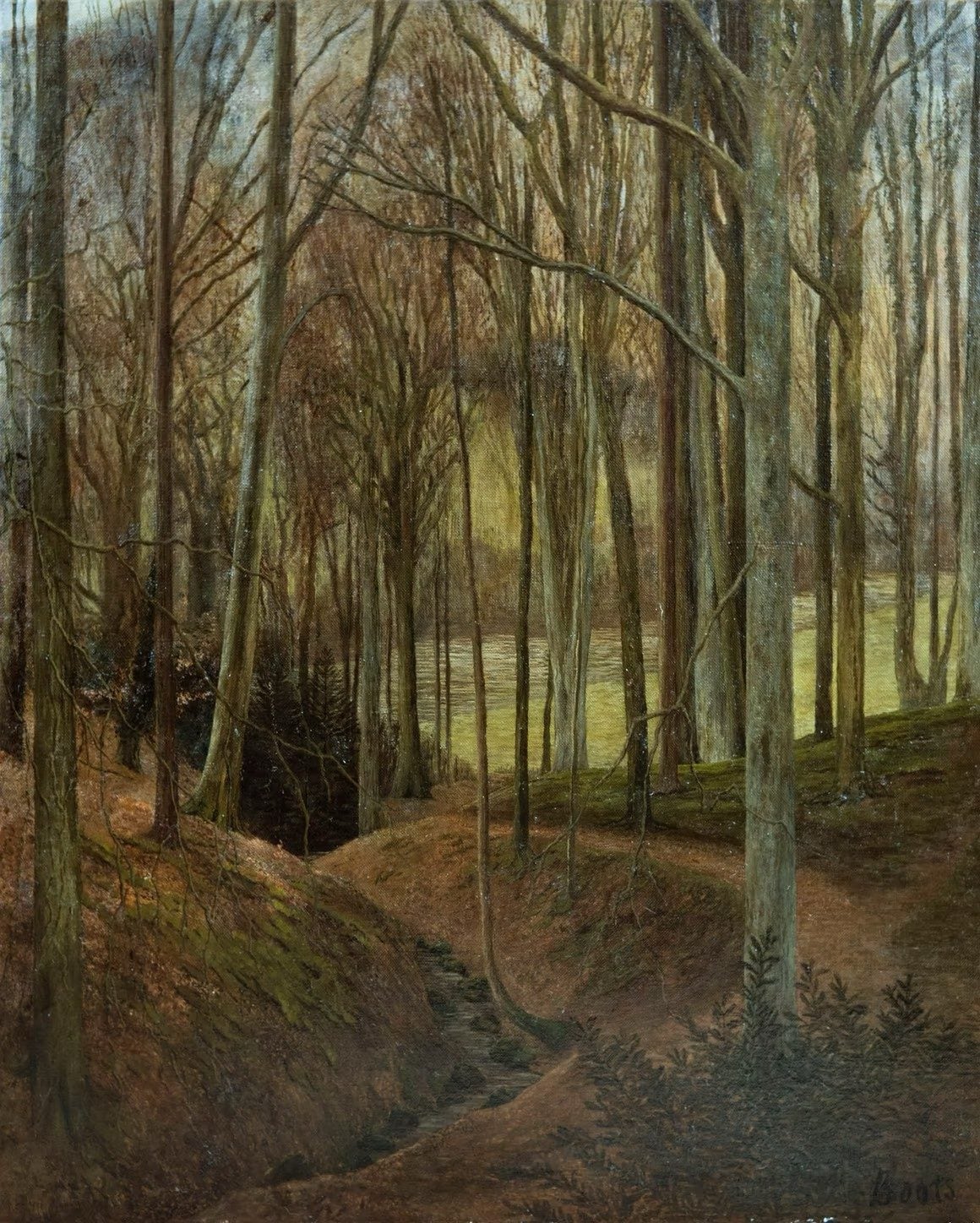
Welsh Borders, 1971 - Estate of Boots Bantock
His subjects of this time were lyrical landscapes of the Arthurian hills of Somerset, the country houses of friends and friends of friends, abandoned farmhouses and potting sheds, and cathedrals of lonely beech trunks in the manner of Paul Nash. His painterly eye celebrated the seamy side of decaying industrial landscapes, the backwater canals and warehouses of Dublin, Birmingham, East Rotherhithe and Wapping, before conservation had been invented. There were Chelsea exhibitions at the Langton Gallery organised by his school friend Rob Stuart.
Advertisement
Tryingly undomesticated, he raided the fridges of his patrons, insisting that he suffered from an undiagnosed medical condition which required him to eat six square meals a day, washed down with lashings of barley wine (which he claimed to detest) and his signature Underberg pick-me-up.
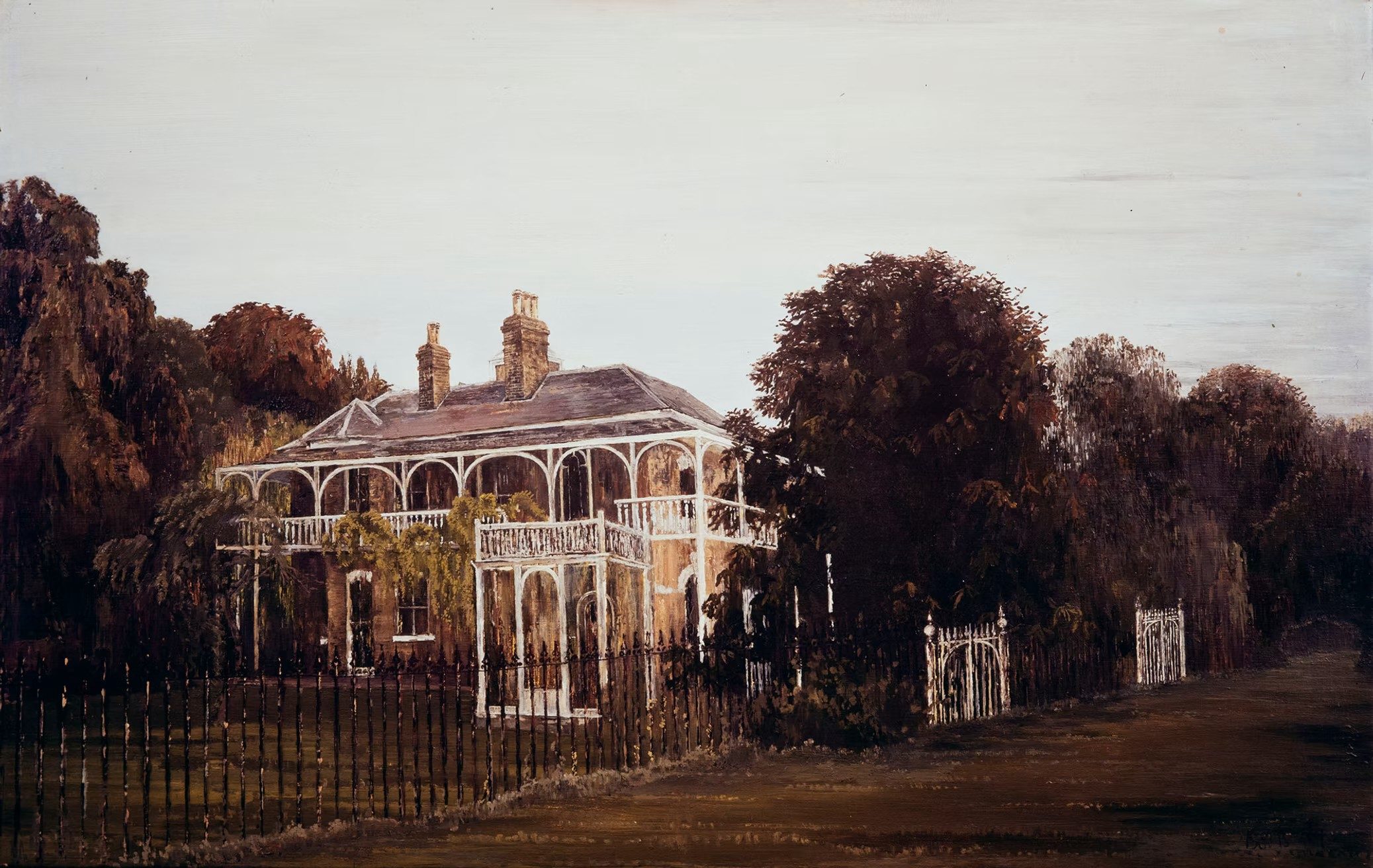
The Grange, 1984 - Estate of Boots Bantock
Back in London in the Sixties and Seventies, in the bohemia of the Colony Room, he invented himself as a rambunctious performance poet. Outrageousness ran in the family. His younger brother Tom, “England’s most famous gentleman poacher”, became owner of a Dean Street den irreverently called “Blacks”, the antithesis of a certain respectable patrician haunt in St James’s. This gave Boots a platform.
Dressed in vintage tweeds or the patchwork motley of a fool, bells jingling on his cockscomb cap and sleeves, he declaimed his rhyming doggerel, running to hundreds of lines in thumping rhythms, modulating his expression as he boomed in stentorian tones, or chanted in a prestissimo patter, occasionally hinting at the patchwork wisdom of a Shakespearian Feste:
“The distance misbehaves, on this strange old shingle shore:there’s no more I can call home.”
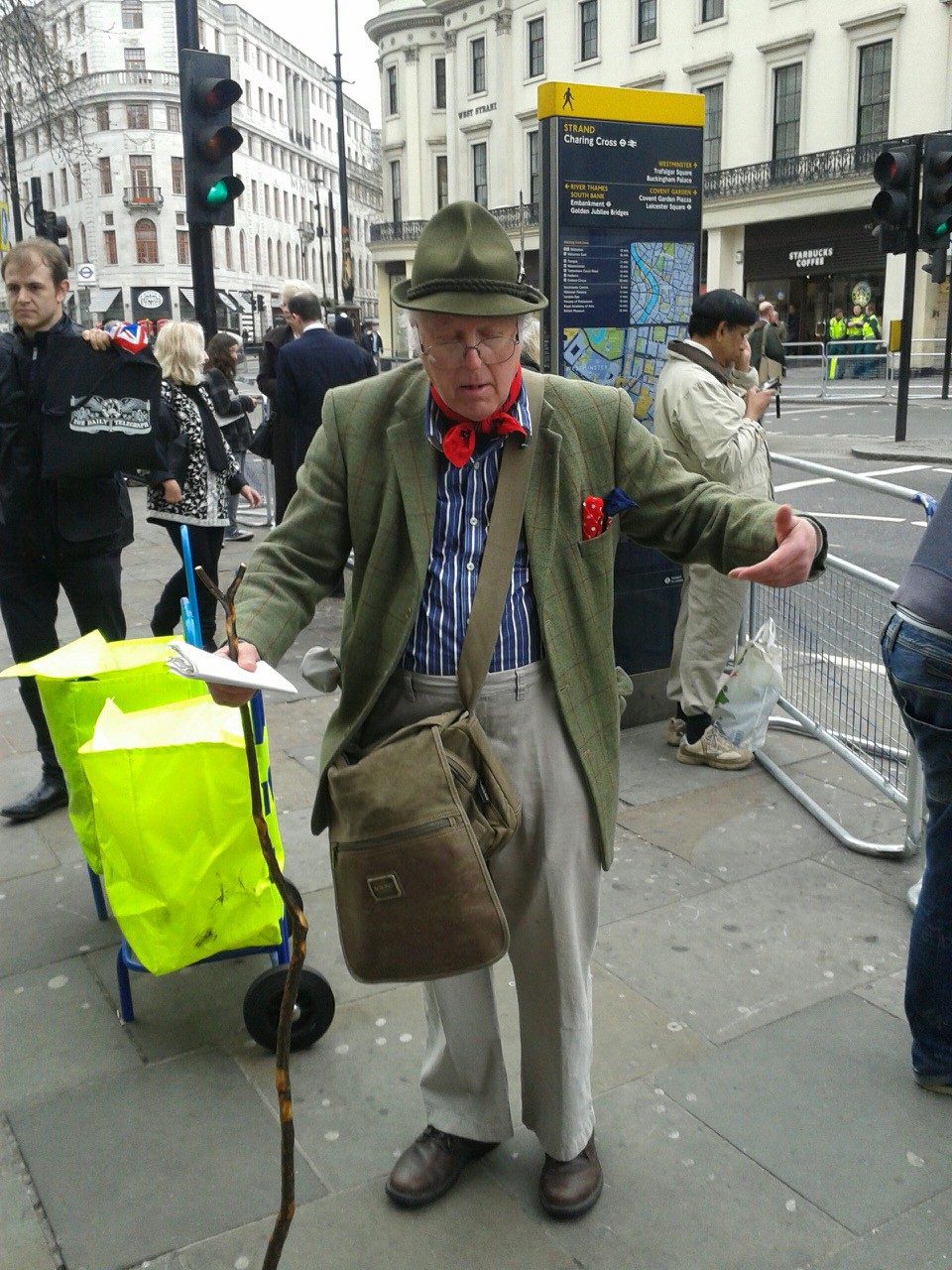
He courted notoriety as the ‘Penny Poet’
From Soho to the tourist arcades of Bath, he courted notoriety as the “Penny Poet”, shouting on street corners after closing time: “If you give me three words, I’ll give you an instant masterpiece.” He was invited to perform at the Dorchester by Dai Llewellyn, at the Dover Street Arts Club for Lord Iveagh, and at the Chelsea Arts Club, or as a cabaret recitalist at country houses, with a stand-up stint at the Edinburgh Festival. Richard Booth, the self-styled King of Hay-on-Wye, appointed him his poet laureate and indulged him, waiting 25 years for a picture Bantock had promised.
Boots became known as the “Bard of Bath” when his protests against the ruination of the countryside gave him television celebrity on the news. At a Friends of the Earth rally in 1980, Bantock shared a platform with Joanna Lumley, Spike Milligan and Michael Palin. There were diatribes against the metric system (“Stand up for the foot: don’t give an inch!”) and various road schemes.
In 1994 he joined forces with Bel Mooney in the Battle of Little Solsbury, a direct-action protest against a bypass east of Bath. Another crusade was against the routing of a motorway through the wetlands of Otmoor, threatening not just the water meadows, but the setting of Henry VIII’s moated hunting lodge at Beckley Park (a house he had wanted to paint).
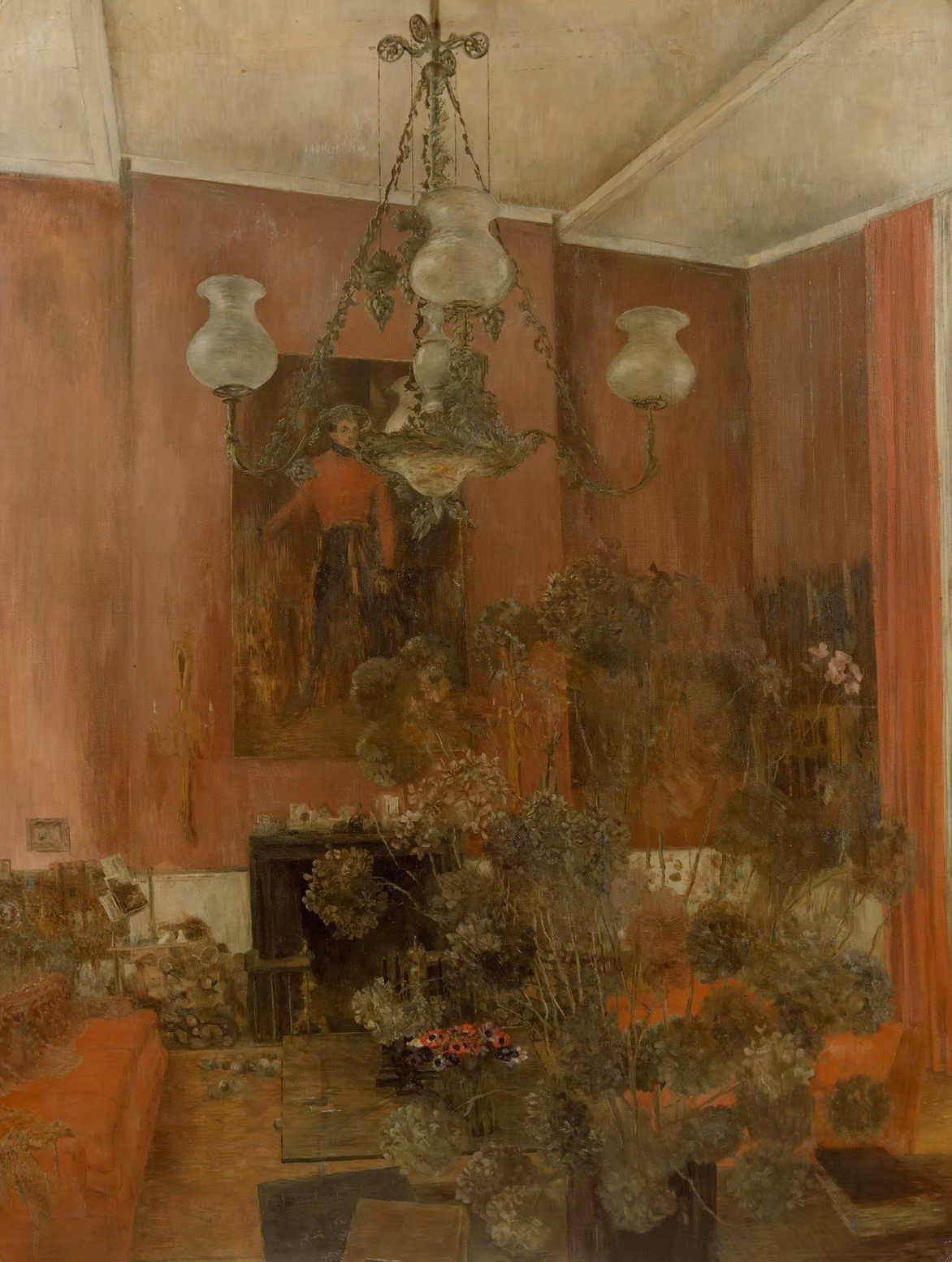
A still life by Boots Bantock - Estate of Boots Bantock
He was by now describing himself as the “official poet of the National Trust”. In 1991 he was appointed the Hermit of Stowe, taking up residence in William Kent’s rusticated ruin on the Path of Vice, when on an open day he was instructed “to leap out of the Hermitage and startle the journalists who had thought refreshments were the only secrets stored in the building”.
He never married, or settled, or published. “The Woods over Longleat” commemorates the years he lived at Longleat, where the Marquess of Bath allowed him to park his caravan. His latter years were a mellow postscript, still wandering and reciting from Somerset to Hampstead Heath, while condemned to a wheelchair, and painting less. Like his late brother Tom, he ended up in Norfolk, where both were said to have written rambling memoirs, probably unpublishable.
He is survived by his two sisters and a loyal, now dwindling, band of friends.
Boots Bantock, born May 10 1941, died June 25 2026
Source: “AOL Entertainment”
